Thursday, March 8, 2012

It's All Mental

We’ve all heard the terms “overachiever” and “underachiever”.  An underachiever being an individual who possesses great skill or intelligence yet consistently fails to live up to expectations.  The flip side is the overachiever.  This is an individual who does not possess remarkable attributes yet achieves great success, mostly through sheer will.  What is it that separates the two?  Why does the individual who is set up to win lose, and vice versa, why does one win when they are not supposed to win?

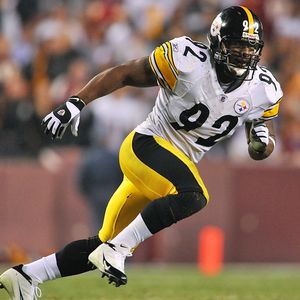
He was cut multiple times yet became one of the most feared NFL players ever.
To me it all comes down to an emotion, nay- an instinct- that is largely frowned upon in modern society and one that is being bred out of the modern male.  It all comes down to aggression and the quality of being aggressive.  Now this isn’t frat boy at a party aggressive.  We’re not talking about the people that are over-the-top Type A and are more or less assholes.  I’m talking about people who take challenges head on and give their all to come out the victor.  The untrained eye may even mistake aggression with enthusiasm and vigor.

Here is an example I see every day.  I’m teaching a hang clean to an athlete.  The athlete has the mechanical skill to do the lift but it still looks off.  The bar moves slow and they “catch” it with their hands out in front of them and then pull the bar to their shoulders instead letting it come to their shoulders in one smooth motion.  In other words they aren’t aggressive with their hip pull and use their arms for much of the lift.  My go-to cue in this case is to simply be aggressive.  I tell them that I don’t want them to pull the bar so that it gets to their shoulders; I want them to pull that bar so that it flies through the ceiling!  A lot of times it works, but sadly some athletes get stuck in the thought that being aggressive is bad or are too shy to display it.

Aggression takes on many forms and wears a slew of hats.  There is the example above along with the 190 pound defensive tackle who somehow leads his high school team in sacks and tackles, the 40 year-old millionaire who grew up on a steady diet of government cheese, the man who sees a mugging in progress and actually does something about it, the firefighter who doesn’t think twice about running into a burning building, or the Marine who doesn't even think once about running into a firefight to save his buddies.  These are all examples of people being aggressive.  Their stress response is triggered, there is a cascade of hormones, and they use their physical and mental capabilities to affect the outcome for the betterment of society and for themselves.

But like I said in the beginning, there is a systematic attack on aggression in society.  The largest and most successful chain fitness center in America prohibits grunting.  They actually have what are called “Lunk Alarms” that go off if someone grunts or drops a weight or does anything that might occur in a normal lifting setting.   It’s Planet Fitness if you wondering.  I could write a whole article on my hatred of that place.

The attack on aggression even starts in little kids.  Kids are going to fight, that’s a known fact.  I distinctly remember the day my sister stopped picking on me forever.  She hit me and I went and told my dad.  His response was to hit her back.  And I did, with a vengeance.  Problem solved.  But now if two kids get in a fight at school they may be expelled or suspended instead of being told to not do it again and to work out their differences elsewhere.  Paul Carter on his blog has an interesting take on why there have been more school shootings in recent years on his blog.  It basically comes down to the fact that instead of being able to release their aggression and work out differences kids are forced to bury their anger until it comes out with geyser-like force and ends in something much worse than a small fist fight.

You stay outta this, lady.
But I’m digressing from my main point.  Unless you are a genetically gifted athlete, which you probably are not, then getting better takes an attitude.  It takes an attitude that you are going to work harder than the competition.  It takes aggression towards whatever is in opposition to getting what you want.  That could be an opponent standing in front of you or it could be a heavy-ass barbell resting silently on your back.  Both want you to be a crumpled heap on the ground.

Recent research has even shown that the point of exhaustion that we have all felt at one point or another is a psychological perception and not a physiological fact.  That’s to say, when you quit due to exhaustion, fatigue or whatever YOU have made the conscious decision to quit.  Your body could have kept going; it’s your brain that quit.

Quitter.
If you don’t believe me I invite you to watch any of the multiple documentaries on the internet that detail Navy SEAL training or BUD/s.  Every one of the men that complete the training has the innate ability to silence the voice in their head that screams for them to stop.  Shit, just the training that is done to qualify for BUDS/s would take out most "hardcore" lifters.


Is this an optimal way to train all the time?  Some would say yes but I’m more of a mind that you need to pick and choose your battles.  But when you’ve chosen to go all out, THEN GO ALL OUT!

It is sometimes hard to coax that inner aggressor out of these kids.  A lot of times becoming a better athlete is the first thing they've ever had to put any real physical effort into.  But once they realize that going through the motions and being cautious, and trying not to stick out aren't going to cut it good things start to happen.  You can see them before a lift talking to themselves in their head, silently building a rage and contempt for whatever it is that seeks to hold them down, be it a barbell or all the people that have doubted them.

If you've never felt that primal urge that one of your ancestors felt when he scaled a hill only to be confronted with a hungry sabre-tooth tiger then you are lost my friend.  You’ve let society pull you towards the middle, towards mediocrity, towards not standing out.  But if you feel that same rush of adrenaline that your ancestor got when you’re looking at a bar loaded with a weight that you’ve never lifted before, if you imagine that bar mocking you saying, “Come on you piece of shit, give it a pull.  Doesn’t matter to me.  You.  Don’t.  Have.  It.”  And if you let that hatred of being told you can’t, of being told you’re not good enough, of being told you don’t have the genetics, of being told to give it up, pack it in and go home, and then you grab the bar and rip it from its resting place and hoist it aloft in defiance of everything and everyone that would attempt to hold you down….well, my friend....you’ve got a chance.  And if you’ve got the attitude and the aggression, a chance is all you need.

Related Articles:


Get Comfortable Being Uncomfortable
Musings on the Consequences of the Participation Trophy Generation
The New Year's Resolution Solution
Hard To Kill

Sources:
http://running.competitor.com/2010/03/features/sports-science-update-perception-is-everything_9067

The limit to exercise tolerance in humans: mind over muscle? Samuele Maria Marcora and Walter Staiano.  EUROPEAN JOURNAL OF APPLIED PHYSIOLOGY Volume 109, Number 4, 763-770.

Monday, March 5, 2012

The Protective Benefits of Intermittent Fasting


In a previous article I pointed to some talking points about intermittent fasting as it pertains to health, metabolism, and weight management.

Intermittent Fasting: A Few Talking Points

Those talking points are the things that are relevant to most people, especially the weight loss aspect of it.  Intermittent Fasting has a host of other health benefits, besides just being a useful tool for improving metabolic function and weight management.  Many studies have been performed showing that Intermittent Fasting has useful implications for cancer patients, Alzheimer’s sufferers, and those recovering from peripheral nerve damage.  So what I’m trying to say is that Intermittent Fasting is REALLY COOL!

These extra therapeutic benefits are due in large part to the fact that fasting induces cell autophagy.  The previous article touched on autophagy as it relates to muscle function.  Essentially autophagosomes sweep the muscle free of disfunctioning muscle proteins and the “garbage” that accumulates and contributes to muscle cell atrophy and weakness.  Autophagy is also largely at play when it comes to brain and nerve function and tumor growth.

A Word of Caution
Many studies that have investigated dietary protocols and nervous system function and cancer have been done on mice.  Any study done on mice needs to be held at arm’s length due to the fact that we humans are, in fact, not mice.  The reason all these studies are done on mice is that A) these are relatively new topics of study and are therefore done on mice first, and B) not a lot of people would sign up to be given cancer or neurological disorders.  Some people can be so selfish.
Not a human, but if you know this movie you get a million gold stars.
Also, since I’m not going to pay hundreds of dollars to read studies I’m only looking at the abstracts.  Abstracts can put you on the right track but it is sometimes impossible to discern whether or not a study was set up correctly, carried out correctly, etc. etc.  Also, reading whole studies is like eating nothing but white bread.  Dry and boring as hell.  On to the findings.

Nerve and Brain Function
Intermittent Fasting and long-term calorie restriction have been known to help improve and retard the effects of aging in the brain and peripheral organs.  Research has shown that Intermittent Fasting can have neuroprotective benefits by increasing the expression of myelin proteins in combination with a thicker myelin sheath, less redundant basal lamina, and a reduction in Schwann cell proliferation.  What this means is that the nerve cells are better protected and are more efficient.  Intermittent Fasting also promotes the clearing of certain protein aggregates which further improve efficiency and function of locomotor skills.

When placed on Intermittent Fasting male rat brains also experience an increase in mitochondrial content in certain areas of the brain and a decrease in oxidative stress to certain proteins.  Essentially the cells get stronger and are exposed to less harmful compounds as the brain ages.

Intermittent Fasting has also been shown to improve functional recovery in rats exposed to spinal cord injury.  The study was done using every other day fasting which basically means a day of fasting followed by a day of unrestricted food intake.  The fasting group of mice had increased nerve integrity, dramatically reduced lesion volume, and increased sprouting of corticospinal axons.  These effects were manifested in improved gait pattern, increased forelimb function during ladder crossing, and increased vertical exploration (why do all of these things sound fun?).


Until recently it was thought that the brain was excluded in the fasting-induced upregulation of neuronal autophagy.  There are drug companies that are investing a lot of money to develop drugs that cross the blood-brain barrier and upregulate autophagy in the brain.  A study done in 2010 showed that this is not needed.  Hopefully the drug companies see that benefits of this essentially free therapy and don’t push unneeded drugs on patients.  I get the feeling that this won’t be the case.

Cancer
Many studies have shown that Intermittent Fasting can lead to a decrease in cancer cell proliferation and tumor growth.  Intermittent Fasting has also been shown to delay tumor onset in mice that are predestined to develop cancerous tumors.  Again, the autophagy pathways that are switched on during fasting are largely at play by triggering cancer cell apoptosis (cell death).

This study mouse is a lot better off than some of his cousins.
Fasting in conjunction with chemotherapy- but not on its own- has also been shown to contribute to long-term cancer free survival in mouse models.  It was shown that the fasting had a sensitizing effect on the cancer cells.  This meant that the chemotherapy would be much more effective.  In breast cancer cells short-term fasting showed increased oxidative stress, DNA damage, and apoptosis.

Summary
Again, all of these studies have been conducted using mouse models.  Mice are similar in biology to humans but at the end of the day they still aren’t humans.  If these findings are validated in humans it will be interesting to see how the drug companies react.  I know cancer drugs are crazy expensive and make a lot of the drug companies a lot of money.  Hopefully the leaders of the pharmaceutical companies will find some kind of human emotion and not push drugs and the resultant cost on patients that don’t need them.  But I doubt it.

Is Intermittent Fasting for everyone?  I would say that many could reap some kind of benefit from it but ultimately it’s up to you to decide if it is or not.  I know that I’ve seen positives from it from a metabolic and weight management stand point.  But if it can keep me as far away from cancer and neurological disorders as possible I’ll keep doing it.  Oh, and as an end note, physical exercise promotes autophagy as well.  So eat right and sling some weight.

Sources:

Intermittent fasting alleviates the neuropathic phenotype in a mouse model of Charcot-Marie-Tooth disease.  Madorsky I, et al.  Neurobiol Dis. 2009 Apr;34(1):146-54.

Late-onset intermittent fasting dietary restriction as a potential intervention to retard age-associated brain function impairments in male rats.  Singh R, et al.  Age (Dordr). 2011 Aug 23.

Neuroprotective role of intermittent fasting in senescence-accelerated mice P8 (SAMP8).  Tajes M, et al.  Exp Gerontol. 2010 Sep;45(9):702-10.

Dietary restriction started after spinal cord injury improves functional recovery.  Plunet WT, et al.  Exp Neurol. 2008 Sep;213(1):28-35.

TCD scientists discover that self-eating cells safeguard against cancer. http://www.eurekalert.org/pub_releases/2011-02/tcd-tsd022511.php

Autophagy inhibition induces atrophy and myopathy in adult skeletal muscles.  Masiero E, Sandri M.  Autophagy. 2010 Feb;6(2):307-9.

Short-term fasting induces profound neuronal autophagy.  Alirezaei M, et al.  Autophagy. 2010 Aug;6(6):702-10.

To Keep Muscles Strong, the 'Garbage' Has to Go.  http://www.sciencedaily.com/releases/2009/12/091201131738.htm

Dose effects of modified alternate-day fasting regimens on in vivo cell proliferation and plasma insulin-like growth factor-1 in mice.  Varady KA, et al.  J Appl Physiol. 2007 Aug;103(2):547-51.

Effect of intermittent fasting on prostate cancer tumor growth in a mouse model.  Thomas JA 2nd, et al.  Prostate Cancer Prostatic Dis. 2010 Dec;13(4):350-5.

Weight-cycling decreases incidence and increases latency of mammary tumors to a greater extent than does chronic caloric restriction in mouse mammary tumor virus-transforming growth factor-alpha female mice.  Cleary MP, et al.  Cancer Epidemiol Biomarkers Prev. 2002 Sep;11(9):836-43.

Adult-onset calorie restriction and fasting delay spontaneous tumorigenesis in p53-deficient mice.  Berrigan D, et al.  Carcinogenesis. 2002 May;23(5):817-22.

Fasting Cycles Retard Growth of Tumors and Sensitize a Range of Cancer Cell Types to Chemotherapy.  Changhan L., et al.  Science Translational Medicine February 8 2012.

Activation of autophagy is required for muscle homeostasis during physical exercise.  Nair U, Klionsky DJ.  Autophagy. 2011 Dec 1;7(12).

Friday, March 2, 2012

Training Update and Some Thoughts


Monday
Bench: 245x3, 220x3x3

Chins: 30 reps

TRX Pushups: 100 reps

Wednesday
Hang Clean and Jerk: 220x1x5

Gun Show

Friday
Dead Lift: 506x1, 440x1x6

I actually did some snatches before the clean and jerks on Wednesday.  I’m very out of practice with them.  I felt strong but very slow.  It goes to show that you get good at what you train.  I haven’t done them in a while so I’m not all that great at them right now.  My technique was good, just not fast and explosive.


Pressing movements are slowly and steadily coming up.  It’s going to take a while.  These have been my slowest moving lifts.  For someone who can squat 500 and dead lift 600 my pressing numbers are pretty sad.  I know that to get better at them I would really need to dial back the lower body training and put more focus into the upper body.  Just not real sure I really want to do that.

I had a client hit a dead lift PR the other day.  She pulled 216 lbs.  It was the first time she’d ever dead lifted anything over 200.  It was one of those small victory moments that stay with you for a long time.  It’s the reason why I love what I do.  When I first started working at NX Level I had more of an interest in strength training.  It has since grown into a passion.  In the beginning I thought it was fun but didn’t really put much effort into the pursuit of knowledge it takes to really be successful.  I was more than happy to just read exercises off of a sheet of paper and be on my way.  Now I take my self-study seriously and am constantly trying new things on myself and those that I work with, always trying to achieve better results.  Needless to say I’m very thankful with where I am in my career.

This weekend Amy and I are hosting some friends of hers.  I’m going to be grilling up some BBQ bacon cheeseburgers where the bacon is chopped up and mixed in with the burger meat.  I’ve never tried them like this before.  To say I’m excited would be an understatement. 

When it comes to musical tastes around the gym Lance and I are on the outside of what most people like.  Most in the gym are good with radio rock, modern rap/hip hop, or Top 40.  None of those really interest me.  I’m into punk rock and metal.  For some reason this music, whether it’s the loud guitars, screaming vocals, or just general awesomeness, causes people to make snide comments.  “Are there even words?”  “Why are they so angry?”  And so on. 

It reminds me of a time when Amy and I were at her parent’s house.  They had country music on in the house, and if you don’t know that I despise most country music you don’t know much about me.  I’ve had just about everyone say to me, “Just listen to the lyrics.”  The lyrics?  It’s usually the contrived, hackney, shitty lyrics that I can’t stand.  Not to mention the hypocrisy of multi-millionaires who apparently “live country”.  But that’s beside the point.  Amy mentioned to her mom that I don’t like country music.  Without missing a beat her mom turns to me and asks, “You don’t like that heavy-metal crap do you?”  My reply was simply, “Mrs. Bachler, I tell people ‘I don’t like country music,’ not, ‘I don’t like that country music crap.’”  We all had a good laugh after that.  My point is that different folks are into different strokes.  It would be a pretty boring place if we all liked the same watered down, formula driven, non-offensive, sophomoric music that populates the airwaves these days.  Sick burn.

A huge congratulations to my great friend Eric Ficek.  About a year and a half ago Eric weighed 385 pounds and had done zero exercise since high school football.  His only attempt at losing weight came during his freshman year of college when he went on an oranges and Everclear diet.  It did not lead to long term success.  After Lance and I ran the Warrior Dash Eric started exercising again.  He got into powerlifting and started cleaning up his diet.  About six months ago he was down to 340 but was essentially on cruise control. 

He mentioned that he’d like to lose some weight to compete in the 275 pound powerlifting class.  I offered up my knowledge and began writing weekly diet plans for him.  His initial goal was to get to 265 so he could have lots of room for the 275 class.  I thought he would be more awesome at the 242 class.  Well, last week he sent me this picture.

240.4 never looked so good.
It takes a lot of hard work, dedication, and sacrifice to lose 20 pounds let alone 100.  The thing about Eric is that there really isn’t anything special about his weight loss.  He did a big chunk of it through the holidays and got a little lose with things.  He didn’t bemoan his lack of fortitude; he just got right back on the wagon.  No one has the iron will to resist every single temptation that comes their way in a six month time span.  As a coach I wouldn’t expect nor would I want a client to resist every temptation.  You need to live a little too.  The hard part is to keep them very sporadic.  I’m talking weeks apart, not days.  So if Eric can lose 100 pounds and do a 180 on his physical status think about what you could do.

And now a little plug; if anyone is interested in online coaching send me an email at tdequaine@hotmail.com or just drop a line in the comments.  Whatever your goals are whether they are training or diet related there’s a good chance I can help you out.  But keep in mind, it isn’t free.

I went sans belt on all the dead lifts today.  All of them felt really good.  I even pulled one of the 440s with a double overhand grip (the hardest grip).  Without the belt I really feel the stress through my abdominal wall and obliques.  I think I’m going to keep the belt off for dead lifts for a while.  Hopefully when I put the belt back on my back and abs will be a lot stronger.


I don’t have anything against training with a belt.  I think younger lifters, and especially athletes, should try to go as far as possible without one though.  You could debate the topic of whether or not it’s cheating or safe for the other muscles and joints doing the work until you are blue in the face.  But the fact remains that you can lift more with it than without it. 

I couldn’t tell you the last time I went to a movie in a theater.  Wait, yes I can.  It was Alvin and the Chipmunks: Chipwrecked.  But the time before that was Due Date.  That came out well over a year ago.  I even have trouble sitting down at home to watch one.  I’d rather read or write or cuddle fight with Saxon.  Also, I might be getting AD- HEY A SQUIRELL!

I hope everyone has a great weekend and thanks for reading!

Monday, February 27, 2012

The Dope Sheet: NO Boosters


One of the relatively new kids on the block, but one that has made a lot of money, in the world of exercise supplementation have been NO Boosters.  These come in a few different forms from just straight l-arginine to glycine-arginine-alpha-ketoisocaproic acid (GAKIC).  To most trainees the claims make sense.  Increased vasodilation brings more blood to muscles which makes you stronger in the gym and increases muscle protein sysnthesis (muscle building) afterwards.  And when products like NO Xplode and SuperPump 250 literally claim you will get “roadmap vascularity and muscle tearing pumps” and have professional body builders saying they swear by the stuff there will probably be a line of trainees out the door waiting to buy.  Sounds great, where do I sign up?


What It Does
Arginine is the major player when it comes to nitric oxide (NO) production.  Arginine is a conditionally essential amino acid and has a host of other health benefits not related to training (mostly in postoperative wound healing).  Arginine is oxidated to NO via nictric oxide synthase (NOS).  The NO is then thought to work its bioactive magic on the muscles and vascular system.  It does this by dilating (makes bigger) the blood vessels.  The reasoning is that the bigger the blood vessels the more volume of blood that can get to and help the muscle perform.  There have also been claims that arginine supplements increase the growth hormone response.

But Does It Actually Work?
Yes and no.  Arginine containing supplements will dilate the blood vessels, that much is true.  And when taken in conjunction with caffeine it can give you a boost of energy.  But, NO has been shown to improve exercise performance in UNTRAINED trainees only.  Anytime a study has been done with trained individuals the benefits have disappeared, even with higher doses.

Even when a study has shown a benefit it is usually short lived.  In a study on young males a NO group and a placebo group performed ten 10s sprints with a one minute rest period between sprints.  The NO group showed an increased mean power for the SECOND SPRINT ONLY.  For all the other sprint trials there was no statistically significant improvement in performance.  Also note that this same protocol was performed with trained cyclists and the NO group showed zero increased performance over the control group.

The increased growth hormone response is also very misleading.  When studies have been conducted at rest there has been shown to be an increase in growth hormone secretion with both high and low doses.  When studies have been conducted looking at growth hormone response to NO boosters in conjunction with exercise, the growth hormone response is actually LOWER than it would have been with exercise alone.

If you are brand spanking new to training NO boosters may give you some performance enhancement in the short term.  BUT, it may actually hinder progress by limiting your natural growth hormone response.  Trust me; you’d rather have a higher growth hormone output than a bit of a buzz doing your 95 lb. bench press.

Should I Take It?
No.

Is It Safe?
If you shouldn’t take it, it doesn’t matter if it is safe.  Buuuut if you’re not going to listen to me and take it for psychological reasons then yes, it’s safe to take.  Even at high doses no real negative side effects have been shown.

Summary
In conclusion, my recommendation is to save your money.  If you want a bit of a kick pre-workout there are much cheaper and equally effective means of obtaining it, like coffee for instance.  Save your money, lift heavy, and spend that money on food that will actually help you build muscle.  Not some broscience supplement that only gives you false hopes.

Getting jacked, bro.
Sources

The effect of nitric-oxide-related supplements on human performance.  Bescós R, Sureda A, Tur JA, Pons A.  Sports Med. 2012 Feb 1;42(2):99-117.

Effects of 7 days of arginine-alpha-ketoglutarate supplementation on blood flow, plasma L-arginine, nitric oxide metabolites, and asymmetric dimethyl arginine after resistance exercise.  Willoughby DS, Boucher T, Reid J, Skelton G, Clark M.  Int J Sport Nutr Exerc Metab. 2011 Aug;21(4):291-9.

Effects of citrulline supplementation on fatigue and exercise performance in mice.  Takeda K, Machida M, Kohara A, Omi N, Takemasa T.  J Nutr Sci Vitaminol (Tokyo). 2011;57(3):246-50.

The acute effects of a low and high dose of oral L-arginine supplementation in young active males at rest.  Forbes SC, Bell GJ.  Appl Physiol Nutr Metab. 2011 Jun;36(3):405-11. Epub 2011 May 16.

Failure of glycine-arginine-α-ketoisocaproic acid to improve high-intensity exercise performance in trained cyclists.  Beis L, Mohammad Y, Easton C, Pitsiladis YP.  Int J Sport Nutr Exerc Metab. 2011 Feb;21(1):33-9.

Glycine-arginine-alpha-ketoisocaproic acid improves performance of repeated cycling sprints.  Buford BN, Koch AJ.  Med Sci Sports Exerc. 2004 Apr;36(4):583-7.

Growth hormone, arginine and exercise.  Kanaley JA.  Curr Opin Clin Nutr Metab Care. 2008 Jan;11(1):50-4.

Bolus arginine supplementation affects neither muscle blood flow nor muscle protein synthesis in young men at rest or after resistance exercise.  Tang JE, Lysecki PJ, Manolakos JJ, MacDonald MJ, Tarnopolsky MA, Phillips SM.  J Nutr. 2011 Feb;141(2):195-200. Epub 2010 Dec 29.

Saturday, February 25, 2012

Training Update and Random Thoughts

Monday
Fat Bar Clean and Press: 154x5
Fat Bar Clean and Push Press: 184x5, 154x5x4

Wednesday
Med Ball Throws
Jumps
Trap Bar Speed Dead Lift: 275 x 8 sets of 3
Gun Show
Complex:
RDLx6, BTN Push Pressx6, Squat Jumpx6

Friday
Squat: 405x5, 365x5, 325x5x2
RDL: 308x5x3
Prowler

There wasn’t a training update last week due to the short week and me being in Wausau, which was awesome.  The Circle of Friends Winter Trips are always a great time.  The kids have a blast and I get to see some of the friends that I’ve made over the past four years of being in the program.  This year I’m going to step up my game and do my own little fundraiser for the trips.  What I’m planning on doing is a 500 pound Dead Lift Challenge.  I’m going to give myself 30 minutes to do as many dead lifts with 500 pounds as possible.  What I’m asking you dear reader is to get on board to donate $1 per successful lift.  I’m thinking about doing it in early June.  


The Dirty Birds
Knowing myself I’m probably going to be good for about 20 reps.  So if you commit yourself to donating no more than $30 dollars then you’ll be helping out a great cause.  I’ll be posting more info once I get the details smoothed out.  If you are interested you can email me at tdequaine@hotmail.com.  DO NOT make me guilt trip the hell out of you guys.  Because I’ll do it.

Squats felt awesome today.  405 felt the lightest it has in a long time.  I really think the med ball throws, jumps, and sprints are helping my strength out of the bottom.  I think I could have probably gone 425-445 for five today.  I gave it serious consideration but decided against it.  Got to think big picture.

I heard Marshall Tucker Band’s Can’t You See the other day on the radio. 


I haven’t heard this song in a long time but has been one of my favorite songs of all time.  The melody of the electric and acoustic guitars, the bass, the percussion, piano, and even the flute, along with the soulful, heartfelt lyrics make this an awesome southern blues rock staple.  It made me very sad for the state of the music industry today.  Very few bands are actually composed of good musicians.  There aren't any songs that have true meaning to the artist.  And because songs like this are now the most popular:


Sometimes I don’t want to live on this planet anymore.

Upping my calories has worked out pretty well so far.  I’m at about 195 right now with not a lot of fluff put back on.  I feel like I’ve filled out well and I think what could be considered fat is just a healthy layer of bloat.  Something that is essential to build muscle.  I hate to admit it but I think my hormone levels were a little depressed towards the end of the diet.  I've noticed I’m not as cold as I used to be, I get hungry even if I have eaten recently (metabolism is higher), and when I wake up in the morning my daily pee is a little more bent over than in the past couple weeks (fellas will know exactly what I'm talking about).  All good things.

I’m going to Texas Roadhouse tonight as part of my Valentine’s Day gift from my girlfriend, Amy.  It’s going to be tough to not look at the steak part of the menu and just say, “Yes.  I'll have that.  ALL OF IT IT!”  I loves me some steak.  And loaded sweet potatoes.  Aaaaand maybe a Shamrock Shake.

One thing I’ve been trying is having a “cheat” day on Saturday and then fasting Sunday with my first meal post cheat being my post workout meal on Monday.  I usually ate whatever I wanted and as much of it as I wanted until about 8 pm Saturday and then started the fast.  This worked ok but I felt like I didn’t have a lot of pop for the lift on Monday.  So I tried inserting a small meal with some protein and veggies right before I went to bed on Sunday night.  Last Sunday I had about 4 ounces of fish with a few cups of steamed broccoli.  No more than 250 calories but a huge difference to not eating.  This setup seemed to give me more energy for Monday’s lift without getting in the way of the benefits of the fast.

Speaking of fasting I’ve come across some interesting research on it.  I think I also saw Harper's has an article on the subject this month.  I’ll probably gather these up and put together another article on the research side of things.  There are some potentially awesome benefits to say the least.

NX Level has a few guys at the NFL Scouting Combine this weekend.  Wisconsin fullback Brady Ewing and cornerback Antonio Fenelus will be shopping their wares all over Indianapolis.  Both of them are great guys who have been busting their asses and both have legit shots at having great careers at the next level.  A couple other guys have pro days and other workout/tryouts coming up as well.  I’m wishing them all the best.

On Thursday night southern Wisconsin was supposed to get 1-3 inches of rain/snow mix and Chicago was going to get slammed.  Instead Chicago got rain and Wisconsin got 5 inches of snow.  Wish I could be extremely wrong when I give clients advice and still have a job.  Oh wait, Dr. Oz is still on TV spouting nonsense and misinformation every damn day?  Never mind.


Friday, February 24, 2012

Best Exercises For Distance Athletes


In the course of my strength training career I’ve been fortunate to work with a lot of distance athletes.  When I say distance athletes I’m talking mostly about swimmers and runners, but cyclists (and triathletes) can be thrown in there as well.  Some have been to the Olympics, some are well on their way, but most are normal high school students or soccer moms that still like to run a 10k of half marathon from time to time.  In that time I’ve noticed a few exercises that most distance athletes will respond well to.

Often times distance athletes downplay the importance of proper strength training in their workout regimen.  It is usually the genetically gifted athletes that can get by and be successful without so much as picking up a dumbbell.  And since the modalities of the successful are usually followed strength training takes a back seat.  Most, however, are not in the genetically gifted category and need a strength training program to gain a competitive advantage.

In fact, strength training can take any distance athletes game to a whole new level.  The goal of strength training for the distance athletes is NOT to create lifters who can squat 500 pounds, bench press 300 pounds, and dead lift a house.  The purpose of strength training for the distance athlete is to make the activity easier.  Here is an example:

Athlete A and Athlete B have identical body types and compete in the same event (let’s say the 1 mile freestyle swim).  It takes Athlete A 45% of the maximal force she can generate to complete a stroke (arm stroke and kick combined).  Because of a quality strength program, it takes Athlete B 25% of her maximal force to complete the same stroke.  Who do you think will tire faster?  Who do you think will eventually win?  All signs would point to Athlete B being the winner due to the higher efficiency of her stroke.  When it gets down to the end of the race she’ll have much more energy to tap into to give her the extra boost she needs to finish the race strong.  And on the flip side of that, if she knows that she can swim the entire race performing each stroke at 45% of her maximal force her 45% stroke will be much stronger, and cause her to travel more distance per stroke than Athlete A’s 45% stroke.

This article is about strength exercises but it should be mentioned that a distance athlete’s best friend is going to be a soft tissue and mobility program that is done on a consistent basis.  Without proper mobility and soft tissue quality all the strength exercises in the world won’t be of much help at best, and at worst will only accelerate overuse injuries.  So if you are a distance athlete you better know your way around a foam roller and lacrosse ball.

Exercise #1: Goblet/DB Front Squat


I’ve become a huge fan of this exercise in the last year or so.  On top of the total body strength benefits it helps teach athletes the proper squatting position.  Having the weight to the front of the body forces the core musculature (abs, obliques, and spinal erctors) to engage hard to prevent the chest from falling forward.
The proper squatting position it pushes athletes into distributes the force of the movement more toward the gluteals (butt).  Many athletes need all of the gluteal work they can get as this area is often tight, weak, and very underdeveloped.


Exercise #2: Reverse Hyper Extension


This is another one for the glutes.  Another reason I love the reverse hyper is that it can really help keep your low back strong and healthy.  Your low back has musculature in it just like everywhere else on your body.  When those muscles get worked they’ll fill with blood and feel tight.  DO NOT mistake this as low back pain. 

Getting all of the muscles that hold your posture in place stronger is going greatly improve posture, especially if you feel upper or lower back pain during races.

Another awesome benefit of all this glute work is that it will help to relieve imbalances through the hips.  Many distance athletes have tight hip flexors and quads and weak and tight glutes and hamstrings.  The tight quads and hip flexors will pull your pelvis forward creating an anterior tilt.  This tilt will pull on the hamstrings and glutes causing them to feel tight when they are actually in a “lengthened” state.  When a muscle is lengthened stretching it IS NOT the answer.  The muscle is already longer than it should be and making it even longer will only further the problem.  Stretching and rolling out the front side (quads, hip flexors) and strengthening the backside (glutes, hamstrings) is the best course of action.

If you don’t have access to a reverse hyper then weighted glute bridges with a dumbbell or barbell are a good substitute.


Exercise #3: Inverted Rows


Inverted rows are one of the best upper back exercises out there.  They are extremely versatile in that there are a ton of variations and can be modified for any strength level.  It’s essentially a pull up but in the horizontal direction.

The horizontal rowing action of the inverted row targets all of the often neglected muscles of the upper back which include the rhomboids, subscapularis, trapezius II and III, rear deltoid, teres major and minor, and the lats.  These muscles are essential for proper shoulder health and function which is especially important for swimmers who perform a lot of work with the front side musculature (pectoralis major and minor {chest}, anterior and medial deltoid {shoulder}, biceps, and triceps).

When the front side of the shoulder girdle is over worked those muscles will become tight, a lot like the front side of the hips.  This will cause the upper arm (humerus) to rotate into an unnatural position inside the shoulder socket.  When the humeral head sits in an internally rotated position this can cause a lot of shear force on the small muscles that make up the rotator cuff and the labrum.  Anyone who has had these injuries can tell you how painful they are and that it would be best to avoid them.

Exercise #4: Band Pull Aparts


These are another excellent upper back exercise.  They aren’t going to make you strong strong, but they go a long way to keeping your shoulders healthy.  An ounce of prevention yaddayaddayadda, as the pundits and grandmothers are so apt to say.

Much like the inverted rows band pull aparts get all the muscles of the upper back firing.  If you are weak to begin with back there the first time you try band pull aparts will be a very humbling experience.  The motion is simple, hold a band at arm’s length with your hands about shoulder width apart.  Keeping your arms straight and your back tight pull your hands apart until the band touches your chest.  Keep the band under constant tension as you bring it back to the start.  Easy, peasy, lemon squeezy, right?  Wrong.  Do fifty and tell me how the pump in your lats and rear deltoids feels.  And then I’ll tell you that’s what getting better feels like.

The upper back can generally recover pretty fast.  These and the inverted rows can and probably should be done 2-3 times per week especially if your shoulders round forward or if your mother has ever told you to stand/sit up straight.  Posture, posture, posture.

Exercise #5: Plank Holds

Solid as a rock.
Plank holds are definitely my favorite core exercise.  They require zero equipment, can be done anywhere, and the tougher variations project how strong you really are.  The reason why your core (which includes all of the musculature from just above your knees to just below your armpits, not just your abdominal wall) is so important is that all energy is transferred through it.  If your core is weak you will leak energy worse than Yugoslavian cars leak oil. 

If you are a swimmer and you are trying to get as big of a push off the blocks or walls but fall apart at the midsection your streamline will stink.  If you are a runner and have a weak core and cannot resist upper body rotation then you will be wasting energy with every stride.  Same goes for cyclists.  If you are preoccupied with what your upper body and midsection are doing you are not focused on what your legs are doing.

On to the planks.  Planks are extremely simple to perform.  Body stays in a straight line, elbows stay underneath your armpits, forearms and toes are the only thing touching the ground.  Holding for extended periods of time (more than a minute) can be beneficial in some instances but I prefer to do more sets with shorter work times while making them harder.  To make them harder all you need to do is lift a foot, an arm, or both off the ground.  You can also wear a backpack with some books in it to add some weight to the equation.  I also really like the RKC version where you try to pull your feet and elbows towards each other thereby creating as much tension through your midsection as possible.  Give some different variations a try.  Planks are like pushups in that there are a ton of different options to keep them interesting.


Exercise #6: Rope Chop Variations


As I hinted at in the plank hold section, the main duty of the abdominal wall, spinal erectors, and obliques isn’t to initiate movement, but instead to resist it.  They also promote movement where movement is supposed to happen (thoracic spine) and stability where stability is supposed to happen (hips and low back).  Rope chops mimic this perfectly by having the rope pass in front while you turn at the mid back and shoulders and resist movement at the low back and hips.  Often times with distance athletes the opposite is the case when moving freely.  The thoracic spine and hips have diminished mobility so the lumbar spine (low back) picks up the slack.  This is a recipe for back pain.

Having poor mobility through the thoracic spine makes breathing in the water more difficult since more of your torso needs to turn to get your face out of the water.  If your thoracic spine is stiff when you run oftentimes your traps and upper back will be the first to fatigue.  Not only that but you’ll leak energy through your hips since they will have to twist more to compensate for the lack of mobility above them.


Summary

Adding these exercises to any distance athlete’s strength training program will not only promote strength increases but also enhance the mobility of the athlete.  When a distance athlete is both strong and mobile then each stride, stroke, and pedal are extremely efficient and use 100% of the energy put into them.  Poor strength and poor mobility are the cause of energy leaks and premature fatigue.  Premature fatigue means shaking your competition’s hand after they get their gold medal.  Be strong.  Be mobile.  Be a winner.

Monday, February 20, 2012

President's Day: 2012

In posts past I've highlighted some of our great nation's most bad-ass Presidents.  Those included Zachary Tyler, Andrew Jackson, and my all-time favorite, Theodore Roosevelt.  In honor of President's Day being today I'm going to highlight the life and times of another one of the leaders that has helped this country be so great, Harry S. Truman.

At the right angle he kind of resembles a bald eagle.
Harry S. Truman began his road to the Presidency by serving in the National Guard during World War I.  He was first declined due to his poor eyesight.  Saying, "Fuck that noise," he memorized the eye chart and gave the doctor the double middle finger as he walked away to get his uniform.

During the war he rose tot he rank of battery commander in a division that had some discipline issues.  During a sudden attack by Ze Germans his unit started to disperse.  Using a long string of cuss words that would make Yosemite Sam blush he ordered them into position.  The back bone fortifying lambasting worked and they made their way to safety.  Under Truman's command his division didn't lose a single man during the war.

Truman was devastated by the ending of the war.  He had a fever, and the only prescription was the blood of his enemies.  He said this at the war's end, "It's a shame we can't go in and devastate Germany and cut off a few of the Dutch kid's hands and feet and scalp a few of the old men."  God.  Damn.  That's some Colonel Kurtz-type blood lust right there.

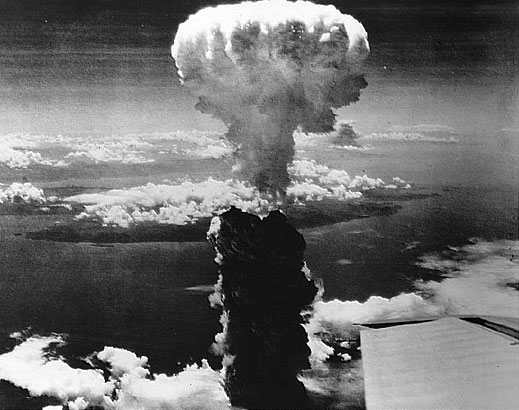
Truman became president during the tail end of WWII when Franklin Roosevelt passed away.  The day he took office was the day he learned about America's secret mission to build and test atomic weapons known as The Manhattan Project.  This would lead to his most defining moment as President; whether or not to use the atomic bombs Little Boy and Fat Man on Japan.

In early August of 1945 after Japan refused the terms of the Potsdam Conference he calmly took the con and made the call.  Japan was going down.  Hiroshima and Nagasaki were thusly devastated and the war was ended.
Boom.
To make the decision to kill almost 150,00 people, mostly non-combatants, is not a decision that I would want to make.  But to Truman it was a no-brainer.  "I knew what I was doing when I stopped the war...I have no regrets and, under the same circumstances, I would do it again."

There are people that say that his decision was immoral and unnecessary but those people probably have dreadlocks, eat shit loads of tofu, and smell like patchouli oil.  In other words, their opinions are meaningless as they more than likely hate freedom AND justice for all.

Warning: Not to be taken seriously.
During Truman's presidency he also oversaw the formation of the United Nations, got Congress to spend the cash needed to restart Europe's post-war economy, and took and hard line no-bullshit stance on Communism.  This was none more apparent than his approval of the Berlin Airlift which supplied the three Soviet blocked Western sectors of Berlin.  The airlift was a huge success and was even continued after road access was granted.  Democracy: 1; Pinko Communism: 0.

Truman was also a champion of Civil Rights in America.  This royally pissed off many Southern politicians but Truman gave not one single fuck stating, "...my very stomach turned over when I learned that Negro soldiers, just back from overseas, were being dumped out of Army trucks in Mississippi and beaten."

Truman went triple dog dare right away and issued three Executive Orders, two in 1948 and one in 1951.  The first essentially desegregated the military, something that was a long time coming.  The second Order stated that those that were applying for civil service positions could not be discriminated against based on race.  The third created the Committee for the Government Contract Compliance which ensured defense contractors to the military couldn't discriminate a person for their race.

When Truman left office he had picked up a lot of haters on the way.  His approval rating was lower than Nixon's in Nixon's last month in office.  Over the passing decades though he has been looked at in a new light, consistently ranking in the top ten in polls on best presidents.  The Navy even named an aircraft carrier after him even though he sought to end the carrier arm of the Navy.  The ship even comes complete with one of the more bad ass battle flags around.  Not a bad way to be remembered at all.


Source:


Wikipedia


Related Posts:


Hail to the Chief

President's Day

Guys I Would Like to Drink With: Winston Churchill