Wednesday, December 21, 2011

Monday and Wednesday

Monday:

Band Resisted Squat:
up to 405x1

Fat Bar Bench:
265x10 singles

Wednesday:

Fat Bar Overhead Press:
up to 185x1, the 135x5x5

Front Squat:
225x5x2

Pendlay Row:
154x6x3
242x3x3

I was having a discussion with a client the other day who always says that his left side- particularly in his upper body- is underdeveloped compared to the right.  I have the same thing except the two sides are switched.  I was thinking about this a few weeks ago and wondered to myself if it had anything to do with the fact that when I was a freshman in college I got a nasty stinger on my right side.  I had no idea what happened and didn't want to be a wuss and stop practicing so I just babied my right arm through the rest of practice.

If you're unaware of what a stinger is it's essentially a stretching or pinching of the bundle of nerves (brachial plexus) that supply the arm.  The initial symptoms such as stinging, pain, and weakness usually go away pretty quickly.  I'm just wondering if perhaps there is more long term damage that doesn't manifest itself until later.  I don't feel there is a huge difference in strength.  I emphasize "huge" because there is some, but this is normal in most people.  It would make sense that I had a bit of damage to the nerves that supply that side of my body and over the course of years of training I'll accumulate a bit more muscle on the non stinger side due to the fact that it's playing with a full brachial plexus.  The stinger side would then be like the kid that could have been really smart but decided to eat a bunch of paste in kindergarten and turned out average at best.  Maybe we'll never know.


Saturday, December 17, 2011

Friday

Clean High Pulls:
264x1x5

Squat:
Up to 385x1, 2 ,3, 1, 2, 3, 1, 2, 3

Fat Bar Bench:
Up to 245x1, 2, 3, 1, 2, 3, 1, 2, 3

Single Arm Row:
4x8 w/ 120s
w/
Inverted Row:
4x8 w/ body weight

Fat Bar Curls:
4x8
w/
Reverse Hypers:
3x12

35 yard sprintsx8

Really good session today.  Squats got a little funky at the end.  I think my piriformi (pl. of prirformis which is part of the gluteal complex near the top and outside of your butt cheek) had had enough by the time I got to the last set.  Since this muscle sits across the sciatic nerve when that little guy gets tight you feel loads of lower back pain.  In fact there are those that would guess that around 90% of low back pain is due to piriformis tightness.  I would tend to agree although I would say it's more just muscle tightness and weakness in general that causes most of it.  I think I've just stumbled upon an article idea.

Wednesday, December 14, 2011

Wednesday


Clean and Jerk:
198x1x3

10 Rounds of:
Front Squat: 315x1
With
Fat Bar Push Press: 205x1

Front Levers: some sets x some reps

Weighted Slide Board Leg Curls: 3x15

Power Wheel Walks: 30, 20, 20 yards

I apologize for the lack of updates lately.  After I did the meet with Lance and Nic at NX Level a few weeks ago I haven’t really felt like recording my training.  I’ve been training pretty much every day but no two sessions have been the same.  One day I’ll dead lift and bench and the next I might just do seated pin presses.  I’m just going by what I feel like doing when I get started.  I haven’t been going heavy every day and it’s really helped me to keep moving forward without having to take a break.  My light days usually consist of calf raises, biceps and triceps, shrugs, and sometimes neck work.  These exercises require a relatively low amount of motor units to be used and help to keep me fresh.  I’ve also tried to really cut down on my assistance exercises on my heavy days.  I go heavy on 2-3 exercises and get out.  When I do add in assistance it’s usually higher reps with moderate weight.

I’ve also been on a diet since November 14th.  Lance and I are doing a fat loss challenge and we’ve got a lot riding on it.  The loser has to buy the winner’s choice of food for our Super Bowl get together.  I started at 209 pounds and 13% body fat.  I’m right about 200 pounds now and if I had to guess I’m just creeping into single digit territory.  I’m feeling really well right now.  I’m still as strong as I was before it started and my energy levels haven’t really crashed at all.  I’d post some progress pics but I forgot to take a before picture and bathroom selfies are about the lamest thing a man can do. 

The main reason that we are doing this is that I’m writing Lance’s diet on a week to week basis and I figured he could use some help/motivation to keep him on track during the holidays.  He’s doing really well and it should be a tight race.

With the update out of the way I’m rededicating myself back to the blog.  I’m going to start trying to write everyday even if it is stuff that doesn't end up getting published here.  I’m hoping to be able to consistently bust out 2-3 new articles every month.  I’m also going to shift my Twitter feed back over to training and nutrition tips and info.  Right now it’s just me trying to be funny which doesn’t happen too often.  So click the follow button on the right for some good bits and pieces of advice.  I’ll also be putting up links to some of my old articles in case any new readers haven’t checked them out.

That’s all I got for now.  Stay tuned for lots more content to come.  Keep training hard and if anyone has questions or comments I’d love to hear them.

Exercise and Brain Health


Here’s a hypothetical question for you.  When you get older would you rather A) have a healthy body and have dementia or Alzheimer’s, or B) become extremely physically handicapped while maintaining fully functioning faculties, or C) maintain a robust physical presence while still being as sharp upstairs as you ever were.  The obvious answer is C, but more often than not people will fall into either the A or B column.  The positive effects of exercise in staving off the effects of Father Time on your body are obvious and plentiful.  But the positive effects of exercise on brain health are only recently being recognized.

Alzheimer’s disease, the most common form of dementia, affects the areas of the brain that control memory, speech, and thought and can seriously impair a person’s ability to carry out day-to-day tasks.  The CDC estimates that about 5.4 million Americans are currently suffering from Alzheimer’s disease.  The number of Alzheimer’s patients has doubled since 1980 and is expected to be at 16 million by 2050.  In 2011 the total cost of Alzheimer’s disease is expected to be around $130 billion.  About 5% of people aged between 65-74 years are affected by Alzheimer’s with that number jumping to 50% or people 85 years and older.

The exact cause of Alzheimer’s is still unclear.  It probably includes several factors that play different roles in each individual affected by the disease.  Scientists have uncovered several risk factors for the disease with age being number one.  Other factors include family history of the disease and risk factors that are similar to those of cardiovascular disease such as high blood pressure and cholesterol and low levels of folate.  Researchers are also starting to uncover some routes for preventing and slowing the progress of the disease once it is diagnosed.

Many studies have begun to show the positive correlates of exercise to brain health, especially in patients with Alzheimer’s disease.  In one study each patient was assigned to either a walking group or non-walking group.  Each patient was administered a mental state examination.  At the end of the study the walking group, in addition to improving walking times, had a much slower decline on the mental state examination (47% for the non-walking group to just 13% for the walking group.)  Studies have shown that exercise increases a cells endurance and resistance to oxidative stress and has positive effects on neurogenesis (growth of new nerve and brain cells) and memory improvement.

Exercise also seems to help improve symptoms in patients diagnosed with depression.  In a study done on treatment-resistant patients, moderate to intense exercise improved depressive parameters and functioning.  Exercise also contributed to the remission of 26% of the patients enrolled in the study.  Although the effects are promising exercise is still only a supplement to normal treatment measures.  In a study that investigated whether or not exercise decreased the risk of post-partum depression in women the only group of subjects that showed statistically significant benefits were those mothers that were not active prior to being pregnant.  In another meta-analysis of the literature on the role of exercise and depression most of the benefits were not statistically significant and more studies were needed.  But just because data isn’t statistically significant doesn’t mean there isn’t something to be gained from it.

Despite what the literature says I can speak from my experience and from the experience of others that exercise can be beneficial for brain health and mood regardless of age or current mental state.  When things aren’t going your way and you feel the weight of the world on you exercise can be there as a way to exorcise (pun intended) some of your demons.  It can be there to be the one thing in your life that you can control.  It can be like a steady ship in a stormy ocean.  Speaking for myself I know that when life throws me a few curves and I can’t get my normal lifts in I’m not the same person I usually am.  Small annoyances go from being mole hills to mountains.  In other words I get a serious case of the Crabapple McNasties.  And once I get back into the gym and hoist some heavy poundages my worries seem to shrink and oftentimes disappear entirely.

The data on Alzheimer’s disease, dementia, and exercise is compelling to say the least.  If something as simple as walking a few times per week can slow the progression of the disease I would think that being active from an early age on would have a beneficial effect as well.  I would like to see some longitudinal studies done on the protective effects of exercise, but for right now make sure you are getting in some good exercise a few times a week and constantly surround yourself with people you care about.  And don’t forget to break a mental sweat every now and again, too.

Sources:


Exercise plays a preventive role against Alzheimer's disease.  Radak Z, et al. J Alzheimer’s Dis. 2010;20(3):777-83.

 Six-Month Walking Program Changes Cognitive and ADL Performance in Patients With Alzheimer.  Venturelli M, et al. Am J Alzheimers Dis Other Demen. 2011 Aug 17.

Exercise-induced cognitive plasticity, implications for mild cognitive impairment and Alzheimer's disease.  Foster PP, et al.  Front Neurol. 2011;2:28. Epub 2011 May 6.

Moderate exercise improves depression parameters in treatment-resistant patients with major depressive disorder.  Mota-Pereira J, et al. J Psychiatr Res. 2011 Aug;45(8):1005-11.

Does exercise during pregnancy prevent postnatal depression?: A randomized controlled trial. Songøygard KM, et al.  Acta Obstet Gynecol Scand. 2011 Sep 1. doi: 10.1111/j.1600-0412.2011.01262.x.

Exercise for depression.  Mead GE, et al.  Cochrane Database Syst Rev. 2009 Jul 8;(3):CD004366. 

Sunday, December 4, 2011

A Few Thoughts On A Saturday Morning

Saturday I woke up early (4:30 am early) to train before work.  Since it was just me at the gym I had a lot of time to myself to think between sets.  A lot of times what goes through my head is inconsequential.  But today I actually had some interesting revelations on training in the morning and a few thoughts on the exercises I chose. Here was the workout.

Fat Bar Bench:
worked up to 265x1x5

Zercher Squats from the pins:
275x1x5, 315x1x2

Pendlay Rows:
220x3x5

Wall Walk-Ups:
4x5
w/
Band Pull Aparts:
4x20

If you are someone that doesn't usually train early in the morning getting up and throwing some weight around can be a shock to your system if you don't prepare correctly.  If you are someone that consistently trains early you have probably noticed that your body has become adapted to it.  But if you are someone that only does it once every few weeks here are some things that can help you stay productive when all you really want to do is crawl back in bed.

Get up 1.5-2 hours prior to training: I wanted to start by 5:45 am so I set my alarm for 4:30.  Waking up at least an hour before you start is important to get out of sleep mode and get the nervous system firing.  Getting up and doing some light stretching is a great way to get amped up for the coming lift.

Go through your normal morning routine: Especially if your routine is designed to help you wake up and get ready for the day.  If you get up and have coffee or take the dog for a walk or take a shower try to follow that plan before you go train.  This goes back to the first point in that just getting up and moving is a lot better than rolling out of bed and right into the gym.

Hydrate: If you aren't going to drink at least 24 ounces of water before you set foot in the gym then just go back to bed.  Due to your body's natural rhythm of hormones you are naturally dehydrated in the morning.  This is why you feel stiff and why your morning pee looks like diluted coffee of flat Coca-Cola.  Getting some fluids in will lubricate your joints and get your body's systems going at top speed.

Eat: After fasting for anywhere from 8-12 hours overnight your body is in a catabolic state.  That is it's breaking stuff down, including muscle.  Getting some calories in helps turn off catabolism and gives you some fuel for your workout.  Choose foods that are easy for you to digest and include "white" proteins (egg whites, chicken, fish) and some simple carbohydrates (fruit is my go-to).

Get excited: Getting excited about training the night before will almost ensure that you will get up and get moving and get motivated to train.  Not a lot of people can or are willing to get up and train early while the rest of the world sleeps.  Know that you are doing something that 95% of the population will call you crazy for doing but will get you closer to your goals.  To paraphrase 50 Cent, "Sleep is for poor people."

While I don't think early morning is an ideal time to train, sometimes it's the only time available and I'll be damned if I let some piddly excuse like, "It's too early" get in the way.  With these tips you can make your early morning training sessions as productive as all the others.

Thursday, November 24, 2011

Hey, How Ya Doin'?

At the same time this question is so innocuous yet so very loaded.  My usual response is, "I've got no complaints."  But on occasion the stresses of everyday life have me saying in my head, "Well, how much time do you have?"  I've come to the realization that my outward response is the truth and my inward monologue is just a bullshit attitude trying to squirm it's way through.

What do I, really, have to complain about?

I've got a roof over my head, I'm in no danger of going hungry, and my furnace is kicking ass as I type this.  I go to work everyday to a job that I love and get to help people.  I've got money in my bank account and a few extra dollars in my wallet.  I've got no major illnesses and haven't been sick in a long time.  I've never worried that tomorrow I might wake up to some crazy madman with a gun that wants to kill myself and all of my fellow villagers.  Shit, just the fact that I'm typing this means I'm doing better than half the fucking people on the planet.  Not too shabby.

So on this day here's a few of life's perks that I'm thankful for:

-Parents that knew when to be parents and when to be friends.

-All of my failures and mistakes and the ability to learn from them.

-Coffee/ caffeine.

-The fact that my dog still loves me even after I give him a bath (which he hates with the intensity of a thousand suns).

-A sister that forces me to hang out with her.

-Family members that have shown me the proper way to be a man and how to treat a woman.

-A wonderful girlfriend who does things like surprise me for my birthday, puts up with me growing a moustache during Movember and then donates to the cause.

-A work environment that values its employees being themselves even if they are jerks (me) sometimes (all the time).

And here's a few of the things that are like icing on this big ol' birthday cake called life:

-Budweiser, Jameson, and all of the other tasty, tasty alcohols
-Nitrous to get me through getting my cavities filled
-Fast cars, loose women
-Huge Beds
-Iron weights
-Books
-Democracy
-The Internet
-Loyal Dogs
-Underwear fresh out of the dryer
-Back Rubs
-Caffeine
-Rock 'N' Roll


There are countless other things that I'm thankful for.  These are but a few off the top of my head.  The point is that I've got it pretty good.  There are very few reasons why I should ever be in a bad mood and the only ones that I can think of involve death.  So on this day think about what you are thankful for and keep it with you every day going forward, not just until the end of dinner.  Speaking of which, I'm going to eat so much fucking turkey.


Song of the Day:

"Not what we say about our blessings, but how we use them, is the true measure of thanksgiving." -W.T. Purkiser

Sunday, November 20, 2011

Who Wants A Ride?

Being that this is Movember wherein members grow moustaches and raise money to help fight prostate and other men's cancers, I think it is appropriate to bring to light some of the most famous moustaches in history and the great men behind them.  The moustache of late has taken on some negative connotations.  One kid at the gym said that I was close to having a "pedo-stache".  This is a moustache that gives the wearer the look of a pedophile.  To the best of my knowledge the kid has never encountered a true pedophile nor grown a single facial hair in his life so he can't be trusted as a knowledgeable authority on either subject.  Regardless, the moustache has been and will always be a symbol of manhood far and wide.  Here are some of the best.

Teddy Roosevelt
Teddy Roosevelt was hands down the most bad assed president ever.  He was a Harvard Boxing Champion in his early years.  He killed people as the leader of the Rough Riders.  He was a cattle rancher in the old days of the Wild West.  Killed all kinds of endangered species in Africa.  And he once started a speech with, “Ladies and gentle I don’t know if you realize this but I have just been shot.”  Yeah, he’d just been shot.


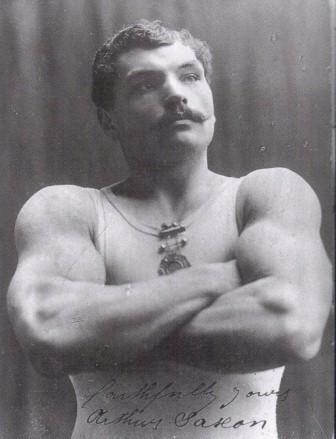
Arthur Saxon


One of the strongest men to ever have lived.  Still holds the record for the bent press and two-hands anyhow.  Don't know what those lifts are?  Google them.  Want to know how he died?  He was supporting a bridge that had cars on top of it.  The bridge failed and collapsed on top of him.  Pretty awesome way to go.

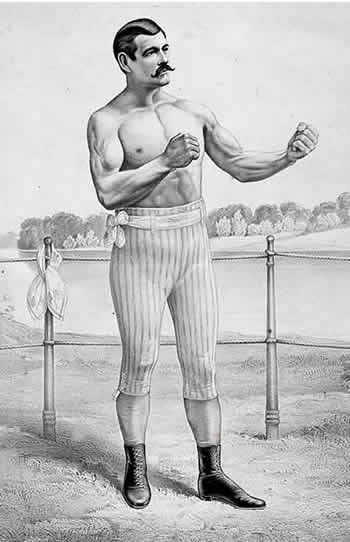
John L. Sullivan

When you invoke the image of a bare-knuckle boxer you think of John L. Sullivan.  He was one of the greatest pugilists of all time.  And boy did he like to drink.  He was the first American athlete to earn over a million dollars and died with $10 to his name.  Like a boss.

Tom Selleck

Since the 1980’s Webster’s Dictionary has had a picture of Tom Selleck a la Hawaii Five-O in place of the definition of the word moustache.  No words are needed.  Only Tom Selleck’s sweet sweet ‘stache.

Hulk Hogan


If you grew up in America in the 80’s you wanted to be just like Hulk Hogan.  I still remember being amazed when my first grade teacher Mrs. Hunt said that we all had the same muscles as Hulk Hogan, his were just bigger.  After the tank top had been ripped off and the bandanna lost all he had was his famous handlebar moustache to beat the likes of the Iron Sheik and Andre the Giant.  The only question that remains is, “What you gonna do when this sweet handle bar moustache runs wild on you brother!?”

There you have it.  Five awesome examples of manliness to motivate you to grow a sweet moustache.  If everyone does their part we can take back the moustache and cast off the negative connotations.  Will you do your part?